
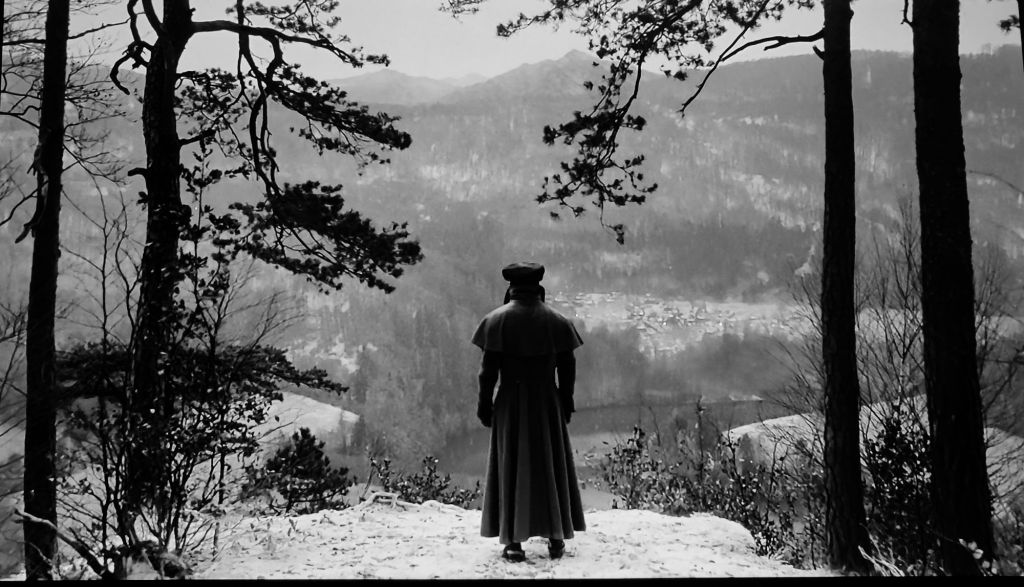
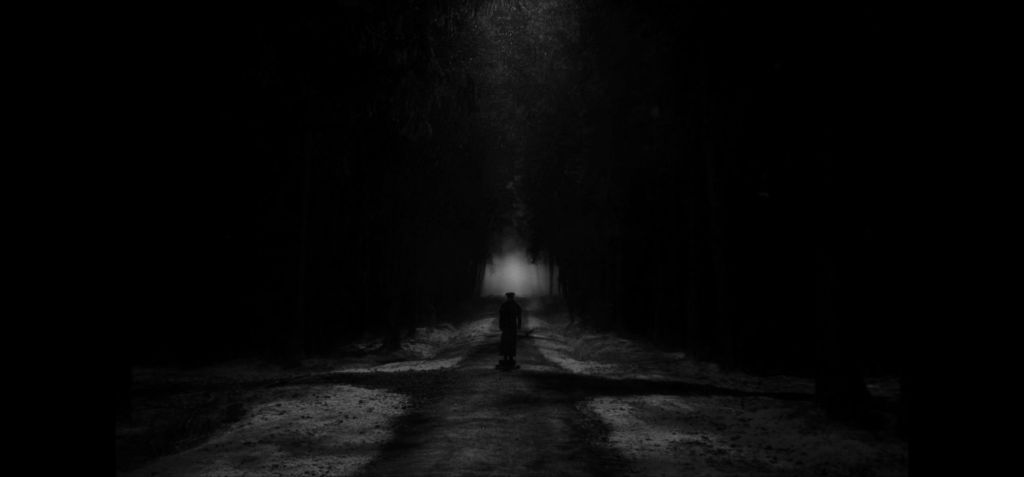
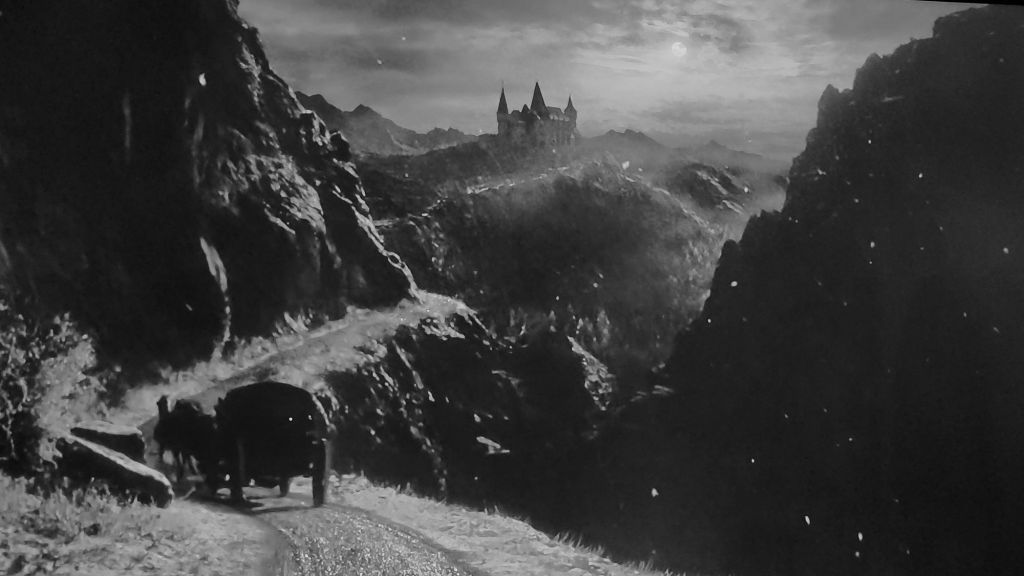
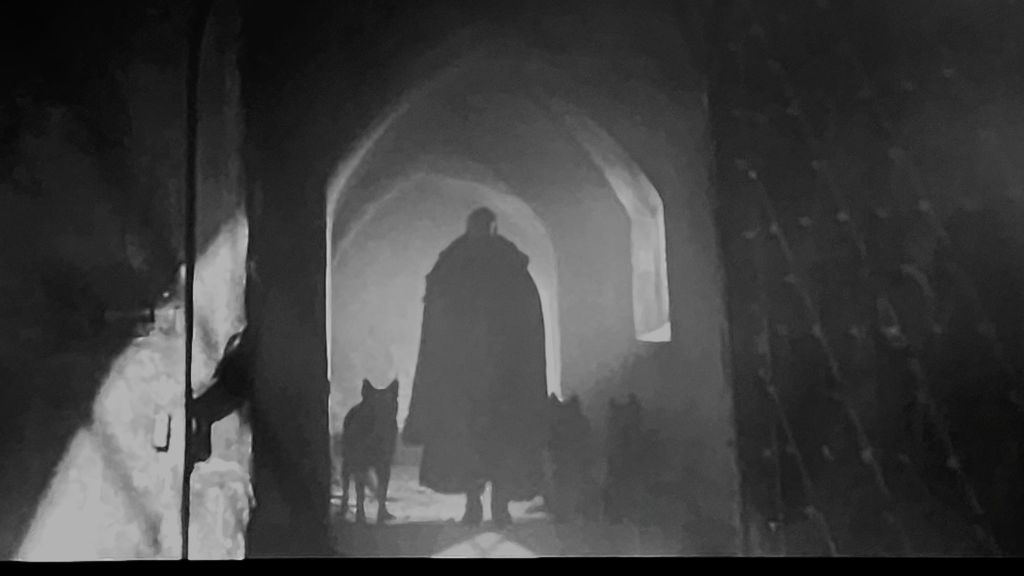
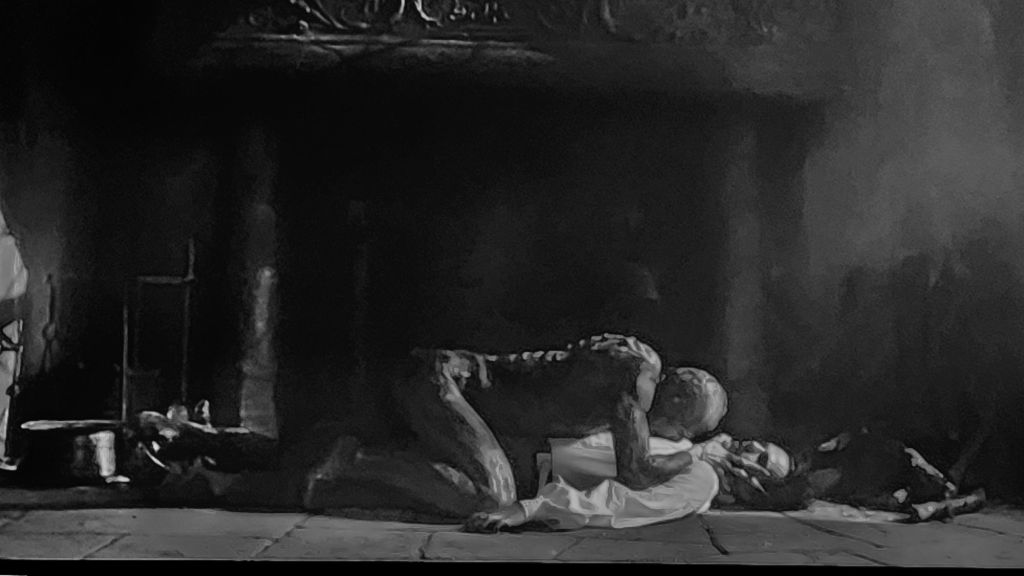
Let’s talk about Robert Eggers’ 2024 Nosferatu specifically as a stand alone piece of film, and not comparing it to any past variations or the original source works. For your reference of my view time observations I have seen the film five times so far; twice in the theater and three times at home, and I plan on going to see it in theaters again. I also attended a live zoom call sponsored by Sundance where the director and cinematographer spoke about the making of the film and answered some questions from us peasants who were attending. I’ve broken my input down into different sections addressing different aspects of the film. I’ve become a bit obsessed or consumed with it, for various reasons. My review/input is a mixture of my own opinions as well as technical aspects. I took the attached photos directly from the film and put them to black and white. That’s actually how it looks for the majority of the scenes when you watch the film, but the colors change when you photograph it. A few of the shots maybe considered plot spoiling, but I did my best to not ruin any of the mystery. My review references various things that happen in the film, but hopefully I’ve done it in such a way that enough details are not given so It does not plot spoil anything for those who have not seen it.
The movie was shot on 35mm film and is in 1.66:1 aspect ratio. Shooting took about 9 weeks and the budget was $50 million. Where I would consider Bram Stoker’s Dracula from 1992 to be Gothic Romance with aspects of horror, this film is quintessential Gothic Horror to its core. To describe the aesthetic, themes, and feeling of the film I would say that it is: beautiful, haunting, terrifying, creepy, visceral, macabre, tragic, stunning, sad, intense, raw, ethereal, obsessive, romantic, historical, and immersive. The dialogue, allegory, drama, atmosphere, and everything in between is masterful. I have not seen such a beautiful artistic piece of cinema in many years, and give it 5/5 stars. I had such high hopes before seeing it for the first time and it went above and beyond all expectations.
Cinematography: The first time I seen this film in theaters one thing that stood out was the supreme use of arc pan shots. I had even made a comment after the fact similar to “wow the cinematographer really loved those.” Initially I thought it was used to provide the post production editing team with a good place to cut the film for edits and changes if they needed it. But one of the big things it accomplished in the film was providing the illusion of character movement. In the first part of the shot you see the character standing in location A, and as the camera circles around the space whether it is a room or outdoors, the next time you see the character again they are in location B. It causes a very ghostly movement effect that distorts the passage of time in a way. How did that character get all the way across that room in the amount of time it took the camera to circle without being seen in the shot? It was a wonderfully executed effect. After having seen the film more, and then also participating in the Sundance zoom call, I realized that a primary reason for many of those arc pan shots was that scenes were shot in one continuous take without cutting. The film is full of a tremendous amount of long shots, which I am a huge fan of.
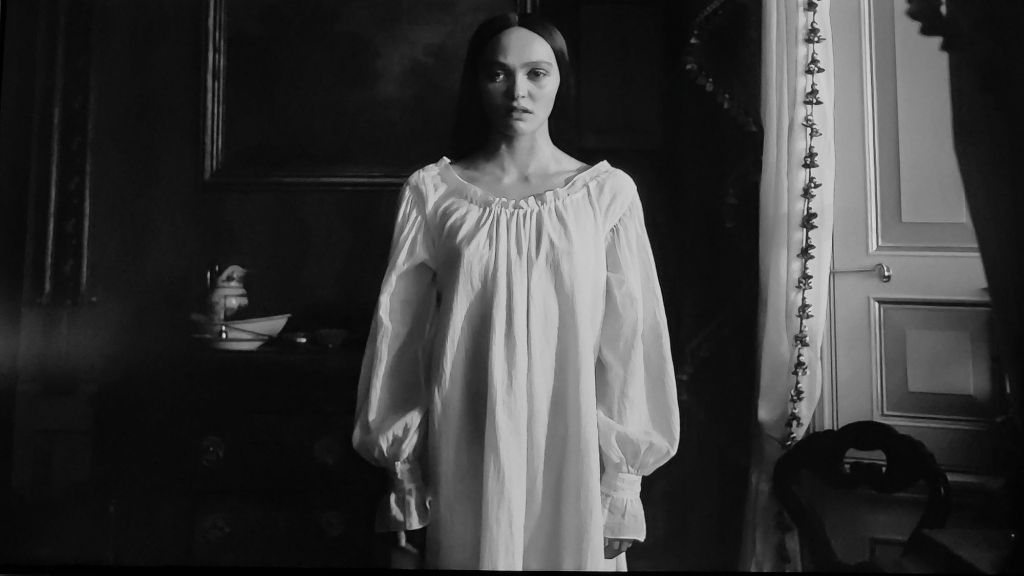
Light & Shadows: Some of the scenes in the film were shot specifically using only candlelight, moonlight, oil lamps, or the flames from a fireplace. Notably; the scene inside the inn as well as in the dining hall of Orlok’s castle. A major reason they did things like this is they wanted the lighting and specific scenes to be realistic to the lighting actually used in a given place or situation, without the addition of back lights or additional set lights. The notes I have from the Sundance meeting was they used triple wick candles, and for shooting used a small depth of field with low apertures, and 1.4:3 was used for candlelight and 2:8 for firelight. The oil lamp in the hallway scene was the only source of light used but was electric light not flames. The extra large shadows cast by it concealed Ellen standing behind her who was hidden there for that whole shot. Specific color lenses were used when they shot with moonlight or at night, and the color palette of the film varies. Some of it is shot in a way that it is true monochrome black and white just from the lighting and shadow work. Other scenes do have color but the colors are muted or washed out. Part of this is because large amounts of natural golden hour sunlight were not used until the end of the film; most of the lighting was subdued or natural like when it comes through a window. The entire film was shot overcast with cloud cover, and the only time you see obvious sunlight is with the sunrise at the end of the film to make it more impactful.
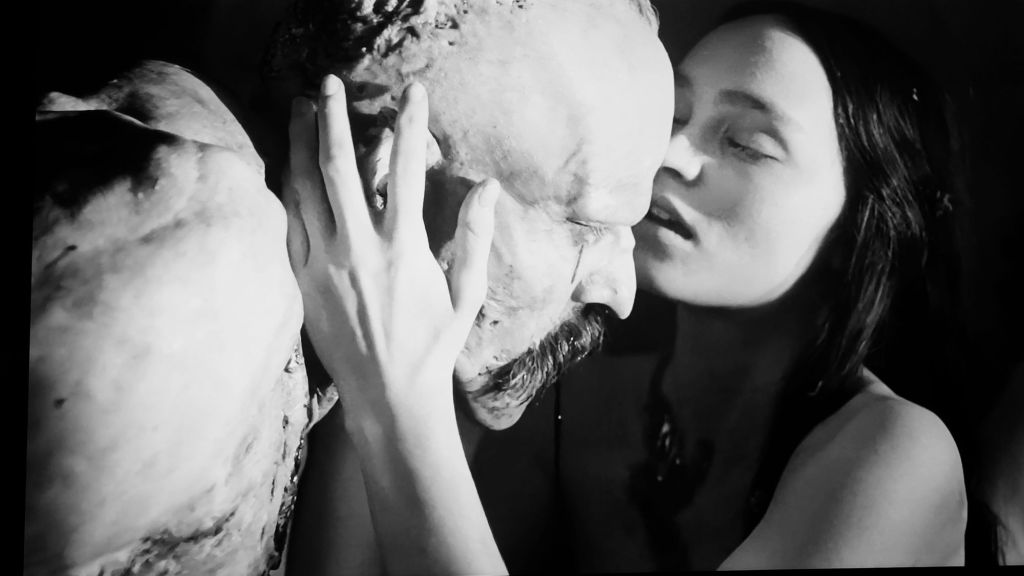
SPFX Special Effects: All the special effects in this film were done practically, which means physical and in-person effects without the use of CG or post-production work. That is, all of them but two: The shadow of Orlok’s hand stretching over the city was done with post-production. The opening scene where Orlok’s shadow is cast onto the curtains was a mixture of both. As I previously noted about there being a lot of long shots and things done in one take, this prevented them from doing Orlok’s shadow on the curtain practically. That scene was shot in one take, and the light settings were adjusted initially to Ellen praying in the dark. The camera then circles around the room and the light changes from the moonlight coming into the open doors. To have been able to done his shadow on the curtains in one shot they would have had to cut, and then change the lighting and exposure settings on the cameras. What they had to do instead was film his shadows separately and put them onto the curtains in post-production. Apparently this point supremely annoyed the Director and Cinematographer to no end because they wanted to do it practically in the same shot but could not because the lighting settings. The animals used were real and on set: the rats, horses, dogs, maggots. I read somewhere that the director had even mentioned that to get some of the blood to contrast as brightly as it did in some of the darker shots, they mixed theater stage blood with Code Red Mountain Dew. All of the makeup, prosthetics, wounds, shadow play, and things of that nature were all done with physical practical special effects which completely adds to the brilliant artistic mastery of the film.
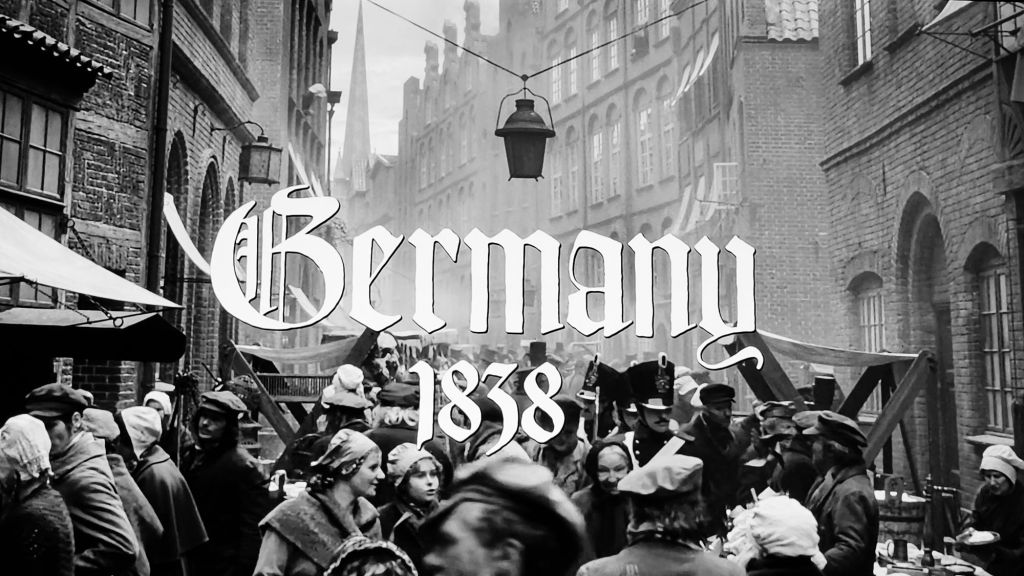
Setting & Location: This is where the aspects of immersion in this film are truly believable, and the production crew went above and beyond with even the smallest details. Everything from the wardrobe, the sets, the shooting locations, and the props were amazing and felt accurate to the time period and place in the world. This also translated over to set design and props within buildings. Families of higher standing in houses that were decorated appropriately and those characters like Thomas and Ellen who were on the lower end financially had appropriately and modestly decorated quarters. Orlok’s castle was nearly in total ruins. Empty, shadowed, and crumbling. Every room you entered into in the film felt as though everything there was appropriate for the setting, and this aspect added to the believable historic immersion. The entire film was shot on location in the Czech Republic and Prague, either at already existing locations or sets that were built. (Like the crossroads in the woods which was a real location, which adds to it’s absolute haunting and ethereal atmosphere.) The Cinematographer had moved to Prague six months before shooting officially started just to being scouting locations.
Wardrobe: The costume design was great; those characters in the film who were more well off or in higher societal standing had more intricate and expensive clothing. Whereas those who were lower class, peasants, or trade workers had clothing befitting their income and station. There’s also been much talk on the internet of people dissecting the various meanings that the clothing and wardrobe choices for characters at certain scenes in the film portray. For example, when Ellen wears the same dress two different times, when you see her in a wedding gown, when Ellen rips her dress and corset open, Orlok’s wardrobe designed after an old world Hungarian/Transylvanian nobleman (Including the mustache and hairstyle, which also tracks more with the source book.), and many other examples. It seems as though even the fashion choices in the film were used to convey a message or metaphors about someone’s mental/emotional state, and I would have to agree with this.
Languages: English is spoken for most of the film, and on the ship the Demeter they are using Russian. During the scene at the inn featuring the Romanian Gypsies, I had assumed they were speaking Romanian. (I did some digging on the internet for upwards of 2 hours after I had seen the film, specifically related to information on the languages used in the film as well as the typefaces used for different things from the subtitles to the movie poster.) It turns out that the language they used was reconstructed from the dead language called “Dacian” which was used by ancestors of modern Romanians. They reconstructed what they could from records of the language, and filled in the gaps with modern Romanian, so it’s essentially an 85% reconstructed dead language which made it feel more authentic. And as far as Count Orlok’s dialogue; initially I thought it was some super old form of Germanic and then in parts it sounded a little bit like Latin. But he is also speaking this reconstructed dead language. The use of these various languages and especially the older dialogues really adds to the authentic historical immersion of the film. Not only is it an old language it actually sounds like one. The language feels ancient, foreign, and is fitting coming out of Orlok’s mouth.
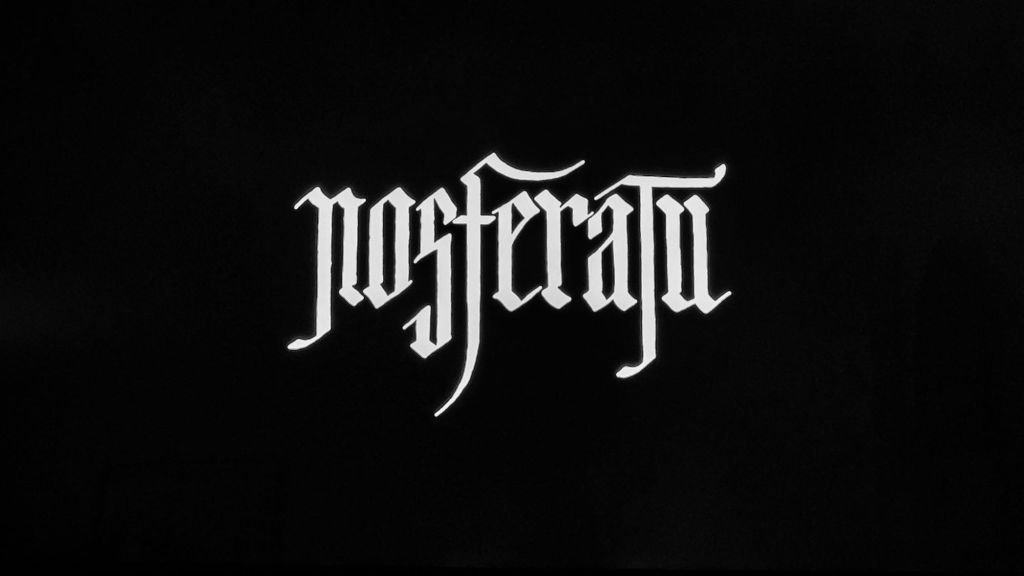
Typeface: The typeface used during the subtitles in the theaters added to the complete aesthetic of the film, and I had not yet seen or remembered a movie other than silent movie intertitles, where they had used a font other than the current modern sarif standards used in most films. I still have not been able to find out the exact name of this typeface, although it is itching in the deep archives of my brain with familiarity. (The closest thing I’ve nailed down for the subtitles font is “IM FELL DW Pica” in italics.) The typeface used for the movie posters specifically the iconic “Nosferatu” text was constructed just for the film using a mixture of Old English and Goudy fonts as a base and designed by Teddy Banks. The various titles from the posters and end credits seem to be in Baskerville.
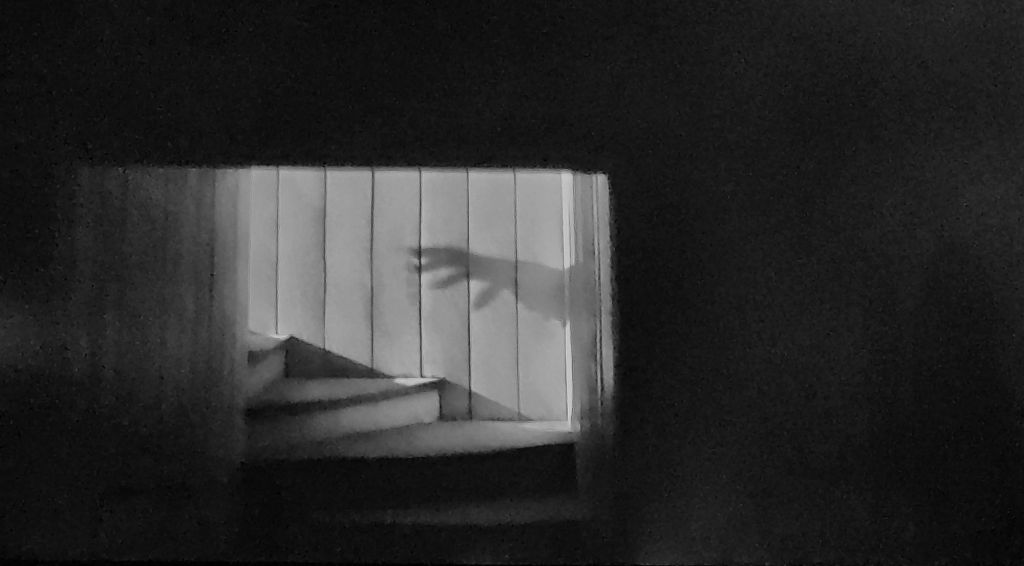
Nods to other vampire films: The first two times I seen the film in theater is when I noticed all of the shots that seem to be nods to other vampire films. There may be some that I missed and some might be a stretch but I will list them here. The scene in the castle with the close-up illuminated shot of Orlok’s eyes is a direct shot from the 1931 Bela Legosi Dracula. There’s also part in the castle where Thomas Hunter’s face is framed and illuminated in the same way as the shot that was done of Lestat’s face in the 1994 Interview with a Vampire film. The scene of the carriage being chased by wolves driving down the lane towards Orlok’s Castle is an obvious homage to the same shot from the 1992 Bram Stoker’s Dracula, And even the music used in that very specific scene is reminiscent of/nearly identical to Wojciech Kilar’s score from the same film. The cast shadow of Orlok’s hand moving along the walls through the house is obviously a bow to the original 1922 Nosferatu film. There is also a nod to 30 days of night from 2007, but as I currently have 10 internet tabs open in my brain related to this film, I cannot for the life of me remember which shot it was. (I’ll update to include it when I remember.)
#nosferatu #nosferatu2024 #filmreview #nosferatureview #roberteggers #gothicfiction #horrorfilm #33mmfilm












 AEL Library & Archives